
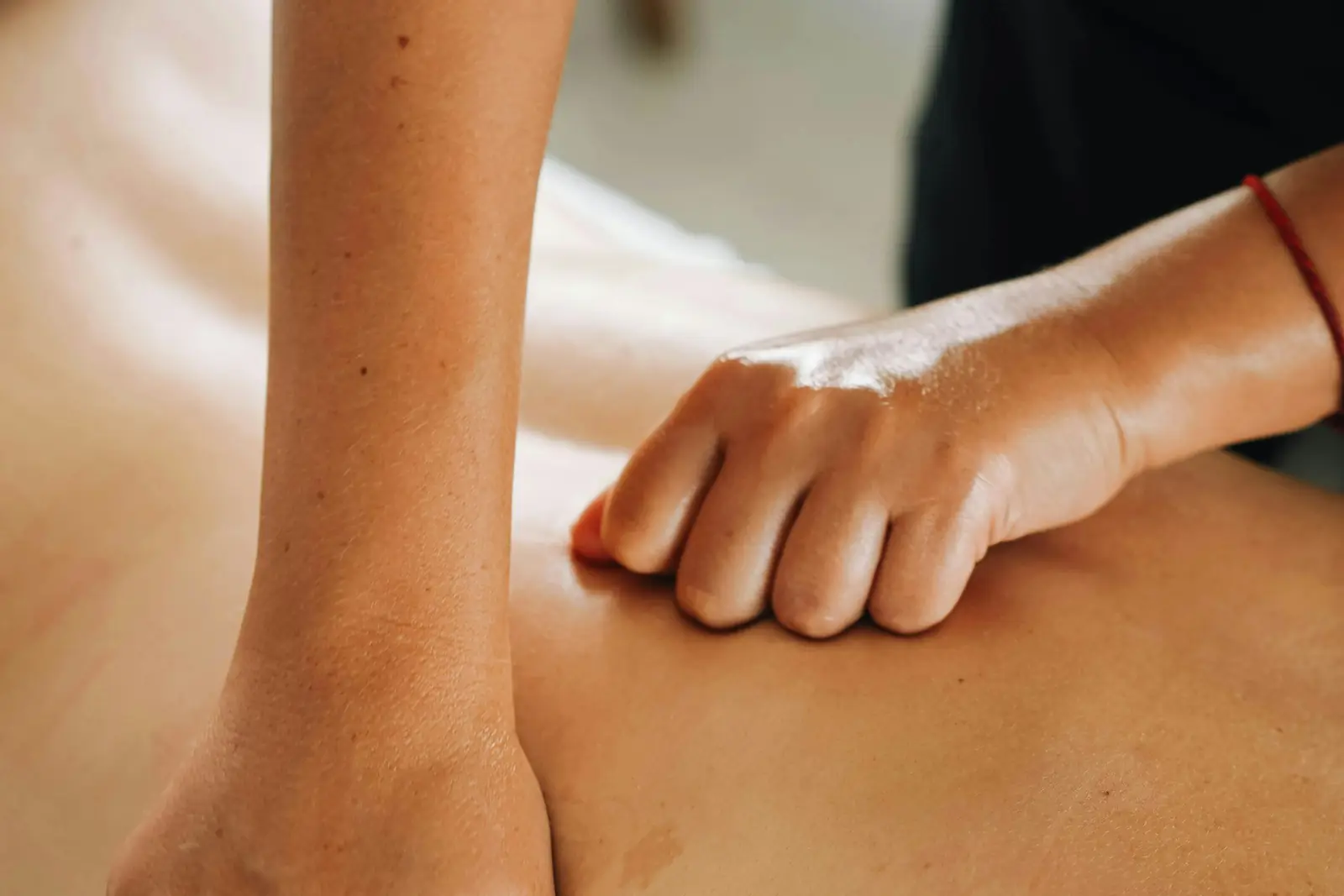
Body tempering · Horsham, West Sussex
Body tempering
For runners and lifters who train hard and want broad, heavy pressure.
Who it suits
- Heavily loaded legs, hips and back
- High-volume running or strength phases
- People who find massage doesn't reach deep enough
- People who tense up under pinpoint pressure
What's involved
- A health and suitability check before every session
- A smooth weighted implement rested or rolled along large muscle groups
- Weight, angle and speed adjusted throughout
- Pause or stop whenever you ask
What is body tempering?
Body tempering is a soft-tissue technique that uses controlled, weighted pressure over large muscle groups. A smooth, heavy implement is rested on or slowly rolled along muscles such as the quads, hamstrings, calves, glutes and back while you lie relaxed.
Instead of the pinpoint pressure of a thumb or elbow, the weight spreads deep, even compression across the width of the muscle. Weight, angle and speed are adjusted throughout to keep the pressure within your comfort.
The method comes from the US strength world and is still uncommon in the UK. Alexander is trained in body tempering, uses it regularly in practice, and it is covered by his professional insurance.
Research into body tempering is still limited. StepStrong offers it as one part of looking after a hard-working body, not as a stand-alone treatment for injury.
What does it feel like?
Most people describe a deep, heavy pressure. Tight areas can feel intense at first and usually ease as the session goes on. It shouldn't be sharply painful, and you can ask for less pressure or a pause at any time.
Who it's for
Hard-training athletes and active people
- Strength athletes, powerlifters and gym-goers with heavily loaded legs, hips and back
- Runners, cyclists and hybrid or endurance athletes during high-volume training
- People who feel ordinary massage doesn't reach deep enough
- Anyone who tenses up under pinpoint pressure but relaxes under broad, even weight
Many people say heavily trained muscles feel looser and less stiff afterwards. Individual experiences vary and no particular result can be promised.
Is it suitable for me?
Body tempering isn't suitable for everyone. Your health is checked before every session, and the technique is only used when it's appropriate. Please tell Alexander before booking, or get in touch first, if any of these apply:
- Recent injury, fracture, muscle tear or surgery in the area
- Blood clotting disorders, a history of deep vein thrombosis (DVT), or taking anticoagulant (blood-thinning) medication
- Pregnancy
- Osteoporosis or reduced bone density
- Active cancer or current cancer treatment
- Varicose veins, open wounds, skin infections, rashes or recent bruising in the area
- Acute inflammation, fever or feeling generally unwell
- Nerve conditions affecting sensation, or any condition where you have been advised to avoid deep pressure
This list isn't exhaustive. If you're unsure, get in touch and Alexander will advise whether body tempering, sports massage or a physiotherapy assessment is the better option.
Your safety
Body tempering uses heavy pressure, so your health is checked before every session and the weight is adjusted throughout. You can ask to pause or stop at any point. Tell Alexander at once if you feel sharp or shooting pain, numbness, tingling or dizziness. Deep soreness can last a day or two. Get medical help if you notice unusual or spreading bruising, a swollen, hot or painful calf, chest pain or sudden breathlessness afterwards. Call 999 in an emergency, or NHS 111 for urgent advice.
Not sure what to book?
Call or email Alexander with a line about what's going on and he'll tell you which session makes sense, or whether you need something else first. Please keep health details brief until you've booked.
FAQ
Questions people ask
Is body tempering painful?
It feels intense and heavy rather than sharp. Weight, angle and speed are adjusted the whole time, and you can ask for less pressure or a pause whenever you like.
Which length should I book?
30 minutes for one region, such as the legs. 60 minutes suits most people. 90 minutes is for experienced clients wanting full-body work. Your first session should be 30 or 60 minutes.
What should I wear and bring?
Shorts and a fitted sports top. Bring water, and tell Alexander about any recent injury, bruising, medicines (especially blood thinners) or changes to your health before you start.
How quickly will Alexander reply?
Alexander reads and answers every message himself, between appointments. If you call and he's with a patient, leave a voicemail and he'll ring you back.
What if I need to cancel?
Give at least 24 hours' notice by phone or email, or the full fee is charged. If Alexander has to cancel, you'll be offered the next available slot at no charge. See Booking policies.
Before you book: health questionnaire, comfort and consent, cancellations and ages are covered in our booking policies.
Ask about body tempering
Tell Alexander what training you do, and he'll check whether body tempering is a good fit before you book.